Feeling energized throughout the day isn’t just about getting enough sleep or drinking another cup of coffee. What you eat—and how consistently you eat—can have a major impact on how you feel, focus, move, and recover.
The good news? Eating for energy doesn’t require a complicated meal plan, restrictive diet, or a kitchen full of specialty ingredients. A few practical nutrition habits can help you build meals and snacks that provide a steady supply of energy while supporting overall health.
A healthy eating pattern emphasizes nutrient-dense foods, including vegetables, fruits, whole grains, protein foods, and other minimally processed choices. Current federal nutrition guidance also emphasizes limiting foods and beverages that are high in added sugars, saturated fat, and sodium.
Let’s look at simple ways to make your everyday meals work harder for your energy and wellness.
Your body needs energy to perform virtually everything you ask of it—from walking and exercising to concentrating at work and simply maintaining essential body functions.
Carbohydrates, protein, and fat all provide energy, while vitamins, minerals, water, and other nutrients help your body use that energy and maintain normal physiological processes.
But not all meals affect your experience of energy in exactly the same way.
A meal built primarily around highly refined carbohydrates and added sugars may provide quick energy but may not keep you satisfied for very long. On the other hand, combining carbohydrates with protein, fiber, and healthy fats can create a more balanced meal that supports longer-lasting fullness and a steadier eating pattern.
Think less about finding a single “energy food” and more about building balanced meals consistently.
You don’t necessarily need a large breakfast, but if you enjoy eating in the morning, make it count.
A balanced breakfast can combine:
For example:
Oatmeal + Greek yogurt + berries + nuts
Or:
Whole-grain toast + eggs + avocado + fruit
Or:
Plain yogurt + fruit + oats + seeds
These combinations offer several different nutrients rather than relying on a single ingredient for energy.
If you aren’t hungry first thing in the morning, you don’t have to force yourself to eat a large meal. Pay attention to your hunger and fullness cues and choose a meal or snack that fits your schedule and needs.
Carbohydrates are an important source of fuel, particularly for the brain and during physical activity. The key is choosing carbohydrate sources that also contribute valuable nutrients and fiber.
Examples include:
Whole and minimally processed carbohydrate sources can make it easier to build meals around fiber and other nutrients.
Instead of thinking of carbohydrates as something to avoid, consider quality, variety, and portion.
Protein helps build and maintain muscles and is an important part of a satisfying meal.
Good everyday options include:
You don’t need to eat large amounts of protein at every meal. Instead, make it a habit to include a protein source alongside your other foods.
For example, add beans to a grain bowl, eggs to breakfast, Greek yogurt to a snack, or tofu to a vegetable stir-fry.
Fat is another essential part of a balanced diet. It contributes to satiety and helps your body absorb certain fat-soluble vitamins.
Useful sources include:
A simple way to incorporate healthy fats is to add a small handful of nuts to oatmeal, drizzle olive oil over vegetables, add avocado to a grain bowl, or use seeds as a topping for yogurt.
The goal isn’t to eliminate fat. It’s to make room for nutrient-rich sources while keeping your overall eating pattern balanced.
Fruits and vegetables bring color, fiber, vitamins, minerals, and other beneficial compounds to your diet.
A simple strategy is to stop thinking of produce as a side dish and start treating it as a building block of meals.
Try:
Fresh, frozen, canned, and dried produce can all have a place in a healthy eating pattern. Choose options that are practical and affordable for you.
When you don’t know what to make, use this easy framework:
Protein + high-fiber carbohydrate + vegetables or fruit + healthy fat
For example:
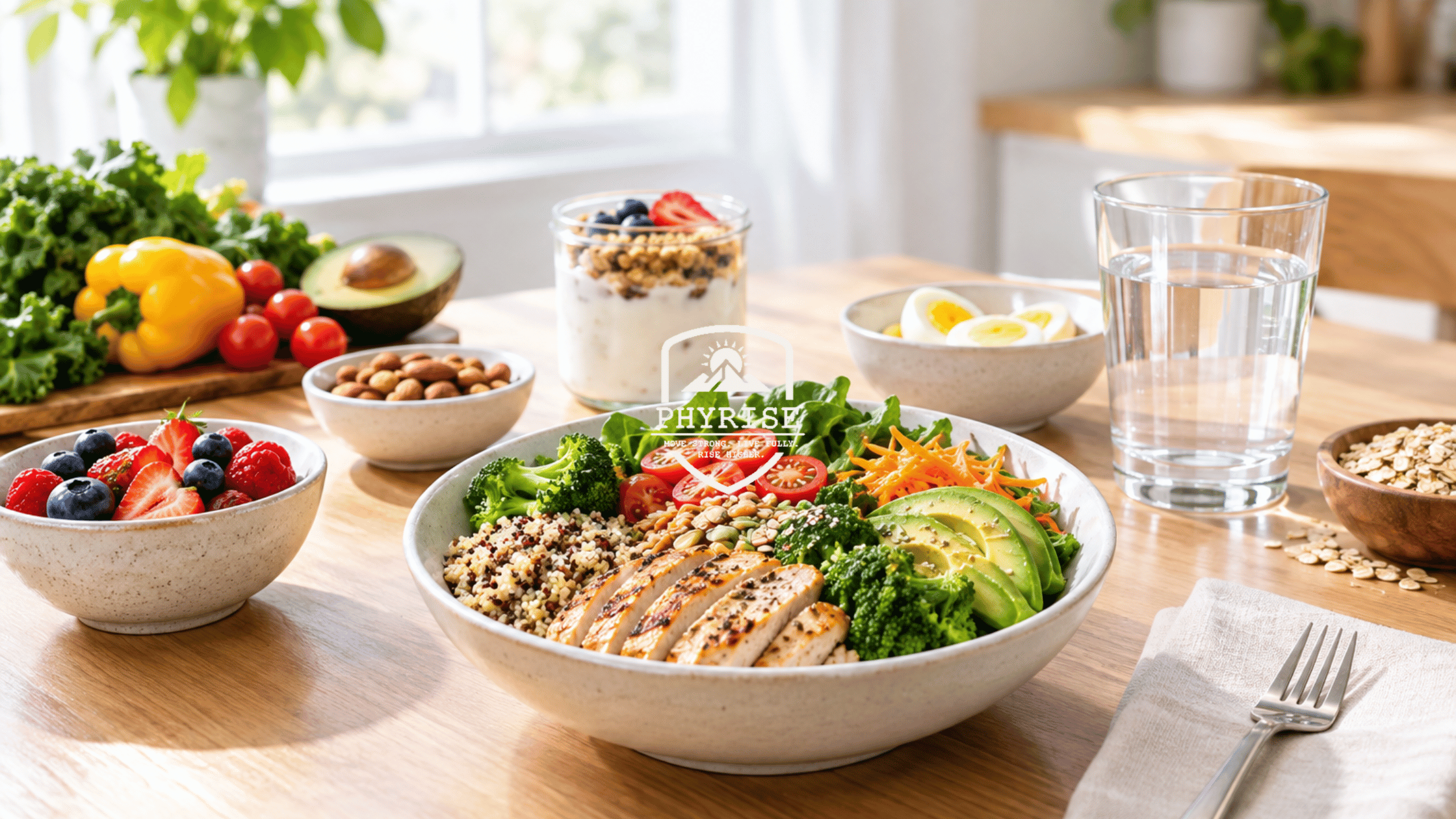
Chicken + quinoa + roasted broccoli + avocado
Salmon + sweet potato + green beans + olive oil
Lentils + brown rice + spinach + tahini
Eggs + whole-grain toast + berries + avocado
This approach gives you a flexible template rather than a rigid meal plan.
It also makes healthy eating easier because you can substitute ingredients based on what you have available.
Sometimes what feels like low energy can coincide with inadequate fluid intake. Water is essential for numerous bodily functions, so staying hydrated should be part of your everyday wellness routine.
Keep water accessible:
Your fluid needs vary depending on factors such as activity, environment, age, and individual circumstances, so there isn’t one universal amount that everyone needs.
If you’re exercising heavily, spending time in hot conditions, or have a medical condition that affects fluid or electrolyte needs, individualized guidance from a qualified healthcare professional may be appropriate.
Snacking isn’t inherently good or bad. It can simply be a practical way to bridge the gap between meals.
The trick is choosing snacks that work for your hunger and schedule.
Try combinations such as:
Pairing foods can be particularly useful when you want something more substantial than a quick carbohydrate alone.
You don’t need to eliminate sugar completely to eat well.
However, regularly consuming large amounts of foods and beverages high in added sugars can make it harder to maintain a nutrient-dense eating pattern. The Dietary Guidelines for Americans recommend limiting added sugars to less than 10% of daily calories for people age 2 and older.
Rather than focusing on restriction, look for simple substitutions.
For example:
Instead of: Sugary cereal every morning
Try: Oatmeal topped with fruit and nuts
Instead of: Sweetened coffee drinks every day
Try: Coffee with milk or an unsweetened alternative
Instead of: Soda with every meal
Try: Water or sparkling water more often
You can still enjoy treats. The bigger picture is your overall eating pattern.
Coffee and tea can be enjoyable parts of a healthy routine, but caffeine shouldn’t have to compensate for consistently inadequate food, hydration, sleep, or recovery.
If you’re reaching for caffeine repeatedly because you’re exhausted, consider looking at the foundation first:
Persistent or unexplained fatigue deserves attention from a healthcare professional rather than simply more caffeine.
Healthy eating becomes much easier when the healthy option is also the convenient option.
Stock your kitchen with ingredients that can become meals quickly.
You don’t need a perfect refrigerator. You need enough flexible ingredients to make a decent meal when you’re tired or short on time.
Meal prep doesn’t have to mean cooking seven identical meals every Sunday.
Instead, prepare components.
For example:
During the week, combine the components differently.
Monday might be a grain bowl. Tuesday could be a wrap. Wednesday could become a salad. Thursday’s ingredients could turn into a stir-fry.
This gives you convenience without making every meal feel the same.
Nutrition isn’t only about what foods you eat. It’s also about your relationship with food.
Instead of automatically eating according to rigid rules, occasionally check in:
Am I physically hungry?
How hungry am I?
What kind of food would satisfy me?
Am I comfortably full?
Mindful eating doesn’t mean analyzing every bite. It simply means becoming more aware of your body’s signals and your eating environment.
There will also be days when you eat for reasons other than hunger—and that’s part of being human.
One of the biggest obstacles to healthy eating is the belief that every meal needs to be perfect.
It doesn’t.
A balanced diet is a pattern over time, not a single plate.
If breakfast was rushed, you can make lunch more nourishing. If you ordered takeout for dinner, tomorrow is another opportunity to include vegetables, whole grains, protein, and fruit.
The Dietary Guidelines emphasize an overall healthy dietary pattern rather than requiring every individual food choice to be perfect.
Think in terms of small choices repeated frequently.
Here’s what an ordinary day could look like:
Oatmeal topped with berries, walnuts, and Greek yogurt.
A grain bowl with chicken or chickpeas, quinoa, mixed greens, roasted vegetables, and avocado.
Apple with peanut butter.
Baked salmon or tofu, roasted sweet potato, and a large serving of vegetables.
Water throughout the day, with additional fluids based on thirst, activity, and environmental conditions.
This isn’t a prescription or a universal meal plan. Your nutritional needs depend on factors such as age, body size, activity level, health status, preferences, culture, and goals.
If you want to improve your everyday nutrition without changing everything at once, start here:
Don’t overhaul your diet. Add something nutritious.
Try eggs, yogurt, cottage cheese, tofu, nuts, or another protein-rich food.
Make hydration convenient.
Try replacing white bread, crackers, or pasta with a whole-grain alternative when it works for you.
Cook a grain, wash fruit, roast vegetables, or prepare protein.
Choose something you enjoy that combines satisfying foods.
Progress is easier to sustain when you leave room for flexibility.
Eating for energy doesn’t require expensive superfoods, complicated recipes, or a restrictive diet.
Start with the basics: build balanced meals, prioritize nutrient-dense foods, include protein and fiber, choose quality carbohydrate sources, incorporate healthy fats, stay hydrated, and keep convenient foods available.
Most importantly, make your nutrition habits realistic enough to repeat.
The best everyday nutrition strategy is one that fits your life—and helps you feel nourished, satisfied, and ready for what the day brings.
A healthier relationship with food starts with simple habits, repeated consistently.
